SrMic
Single strontium atoms, placed one by one, talking via Rydberg states
Quantum simulation, one atom at a time
Many models of interacting quantum particles, for example models of quantum magnetism, cannot be solved on classical computers once more than a few tens of particles are involved. A quantum simulator sidesteps the problem by building the model from real quantum particles. In SrMic these particles are single strontium atoms, each held in its own optical tweezer: a tightly focused laser beam. Exciting the atoms to Rydberg states, in which an electron orbits far from the nucleus, makes them interact strongly over micrometer distances. Combining full control over the atom positions with these long-range interactions gives a programmable quantum simulator, and the same ingredients are the basis of neutral-atom quantum computers.
Why strontium?
Strontium has two valence electrons and therefore narrow optical transitions and long-lived metastable states, the same properties that make it the atom of choice for some of the best optical clocks. SrMic exploits this. The atoms are imaged on the 7.4 kHz-wide narrow-line transition while being cooled at the same time, which allows detection with a fidelity of 99.9% in shallow tweezers and even lets us selectively image or hide a single tweezer. The long-lived 3P0 clock state serves as the starting point for Rydberg excitation with a home-built ultraviolet laser at 317 nm.
What we have achieved
- Narrow-line imaging of single strontium atoms in shallow optical tweezers.
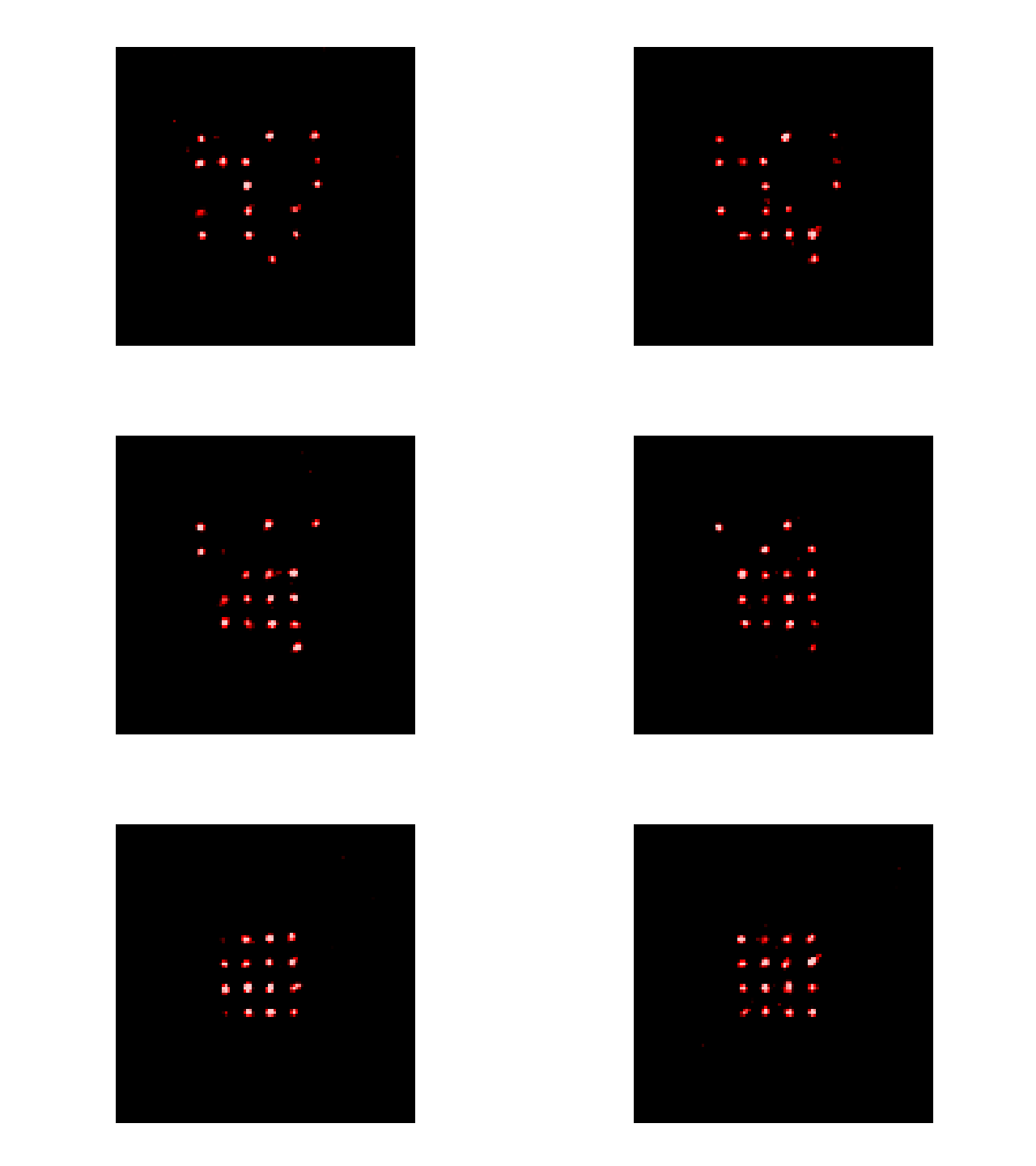
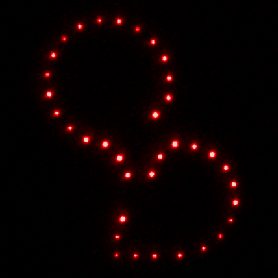
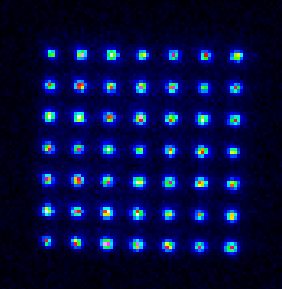
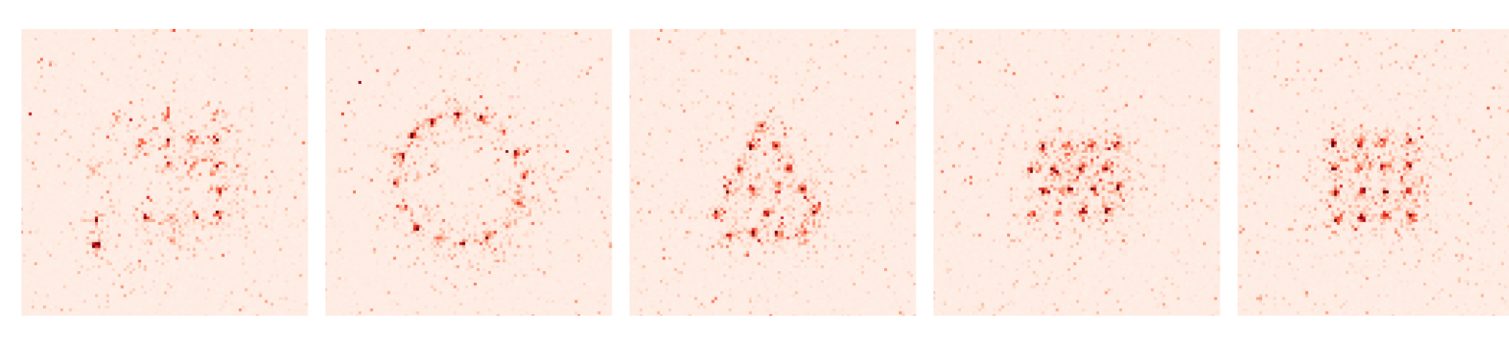
- Fast rearrangement of atoms with a spatial light modulator: holograms are calculated on the fly and updated every 2.7 ms, so a randomly loaded array can be sorted into a defect-free pattern or reshaped into circles, kagome or triangular lattices.
- Coherent Rabi oscillations to a Rydberg state and observation of the Rydberg blockade, the mechanism behind entanglement in neutral-atom quantum computers.
- Preparation of antiferromagnetic ground states of the Rydberg Ising model in arrays of up to 16 atoms.
- First experiments on long-range Rydberg interactions in a fractal geometry, the Sierpiński gasket, together with theorists from Utrecht University.
What's next
Next steps include more ultraviolet laser power for faster and higher-fidelity Rydberg operations, a 698 nm clock laser to prepare the qubit state coherently, more tweezers, and more automation, so that the machine can take data for long stretches without anyone in the lab. SrMic is part of the QDNL neutral-atom quantum computing program, in which we collaborate with the group of Servaas Kokkelmans at TU Eindhoven, and of the European EuRyQa consortium on Rydberg quantum computing.
The machine and working on it
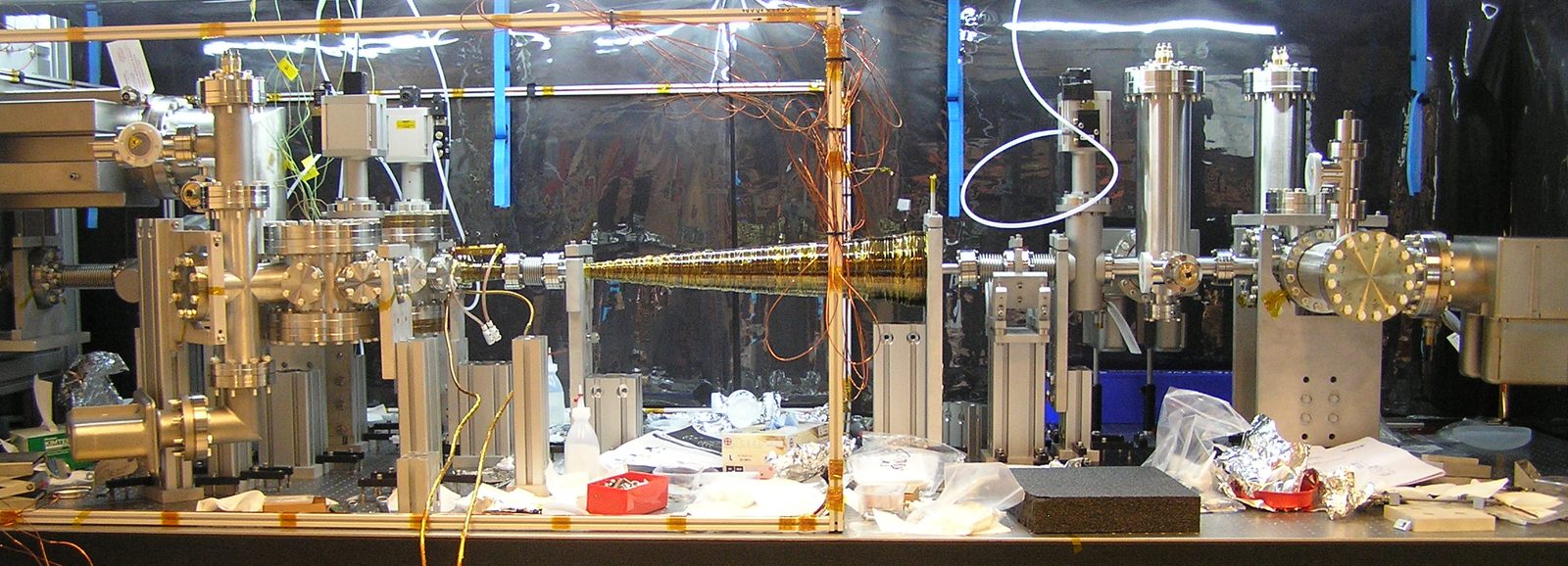
SrMic started life as a strontium quantum gas machine that produced Bose–Einstein condensates and degenerate Fermi gases, intended to become a quantum gas microscope. The team then rebuilt it into a tweezer experiment, because tweezer arrays are versatile, fast and powerful for both simulation and computing. Working on SrMic means optics with microscope objectives and spatial light modulators, frequency-stabilized and frequency-converted lasers, ultra-high vacuum, fast control electronics and a good deal of programming. Robert Spreeuw and Florian Schreck lead the project together.
Gallery